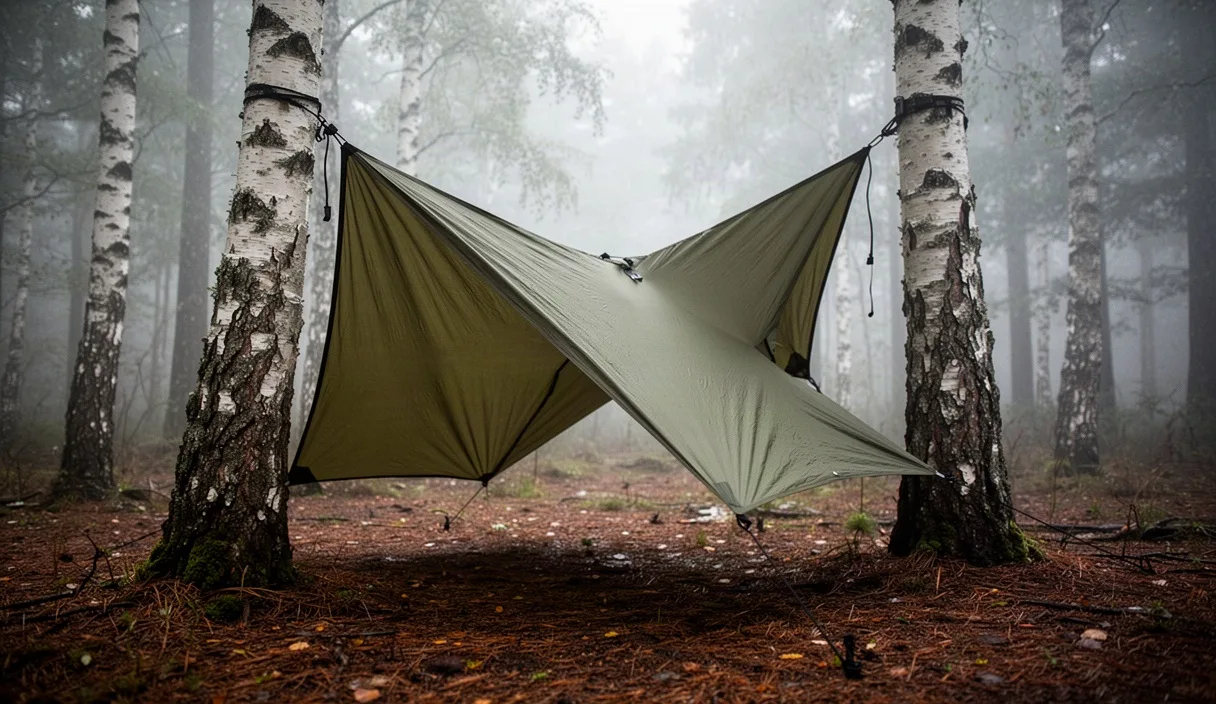
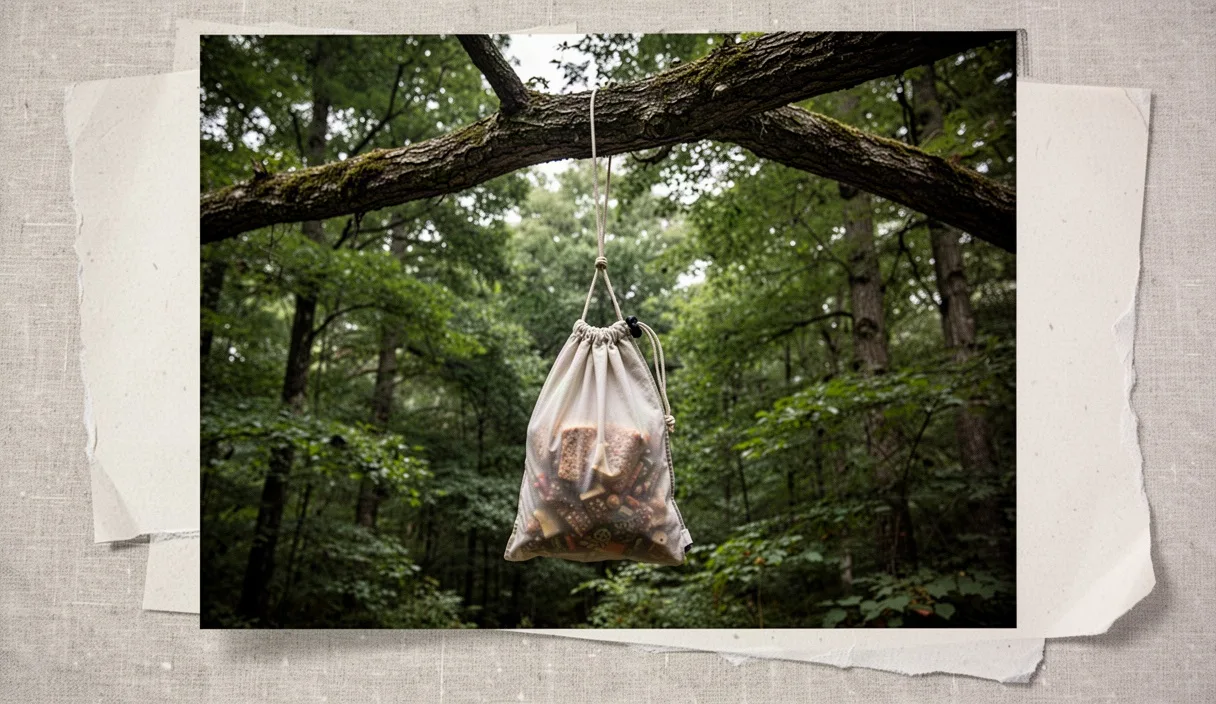
Mice chew tent mesh overnight. Small mammals cause more ruined gear, lost rations, and field contamination on local overnight trails than black bears or apex predators. An aggressive deer mouse needs less than five minutes to bite through 210-denier ripstop nylon to reach an energy bar wrapper, leaving your primary shelter compromised and your breakfast supply contaminated. Preventing these incursions requires active camp management rather than passive trust in standard backpack materials.
Established campsites along state trails, regional parks, and popular lakeshores host resident rodent populations. These animals associate tent pads, picnic tables, and log lean-tos with easy calories. Because they reproduce quickly and maintain small territories, they learn human habits within weeks of a trail opening in spring. Securing your food from small mammals demands precise rigging, verified odor barriers, strict kitchen discipline, and occasionally the physical defense of hard composite containers.
Assessing local rodent and mammal pressures at popular campsites
Rodent density peaks where foot traffic is constant. Sites featuring wooden tent platforms, established fire rings, permanent shelters, and designated privy structures concentrate native species like deer mice, white-footed mice, eastern chipmunks, and bushytail woodrats. Raccoons, striped skunks, and ground squirrels patrol these same perimeters on nightly schedules. In arid regions, rock squirrels chew through packs not just for grain and fats, but for trace sodium deposits left by dried human sweat on shoulder straps and hip belts.
Inspect any new camp for environmental clues before pitching your shelter. Look for rodent droppings along the perimeter logs of tent spaces and inside three-sided lean-tos. Fresh droppings are dark and pliable, while older droppings appear gray, crumbly, and dry. Fresh wood shavings around the lower joints of shelters or nearby fallen logs indicate active gnawing. Check smooth-barked trees for greasy tracking rubs left by rodents climbing toward structural beams or overhanging branches. If you notice flattened runnels through leaf litter leading under large rocks within ten feet of your intended sleeping spot, assume the site is occupied by an active colony.
Different small mammals present distinct tactical problems that dictate your camp strategy:
- Deer mice and voles: Weigh less than two ounces, compress through gaps smaller than a pencil diameter, and chew directly through synthetic fabrics without hesitation.
- Chipmunks and ground squirrels: Active during daylight, bolder around humans, capable of raiding open packs propped against a tree while you pump water thirty feet away.
- Bushytail woodrats (packrats): Attracted to small reflective objects, metal utensils, foil wrappers, and salty straps; they cache stolen gear in deep rock crevices.
- Raccoons: Possess manual dexterity capable of unzipping packs, opening simple latches, unthreading loosely knotted cords, and pulling hanging lines anchored low on tree trunks.
- Porcupines: Seek salt sources in timber country, readily gnawing axe handles, hiking pole grips, and boots left outside tent vestibules.
High-pressure sites require zero margin for error. If you choose an established backcountry campsite with a built-in fire ring and worn-away vegetation, assume you are sleeping inside an established feeding territory. Treat your pack, your cook site, and your personal waste with the same defense level you would use in grizzly habitat.
Odor-proof barrier liners versus standard dry sacks
Standard roll-top dry sacks keep gear dry, but they leak food odors continuously. Polyurethane-coated nylon, silnylon, and ultralight DCF (Dyneema Composite Fabric) feature microscopic pores and sewn or bonded seams that permit volatile organic compounds to escape. To a rodent whose olfactory bulb processes scents at fractions of a part per billion, a nylon dry sack smells like the peanut butter sealed inside it. True odor-proof barrier bags use multi-layer polyethylene, nylon co-extrusions, or metalized film to halt molecular scent transfer.
Bags certified for odor control, such as Opsak or NyloBarrier, rely on specialized hermetic press seals similar to industrial zip closures. These closures block vapors only when kept clean. If you pack a freeze-dried meal pouch with greasy fingers, touch the outer seal of the barrier liner, and roll it closed, the outer surface is already compromised. Keep your barrier liner inside a secondary abrasion-resistant sack, and operate the seal only with clean hands. Wash or wipe the external surfaces if food dust touches them during meal preparation.
| Container Type | Material Base | Scent Containment | Puncture Resistance | Rodent Deterrence |
|---|---|---|---|---|
| Roll-Top Dry Bag | 70D Polyurethane Nylon | Low (pores leak vapor) | Moderate | None (teeth bite through quickly) |
| Ultralight Dry Bag | Silnylon / 1.0 oz DCF | Very Low | Low | None (punctures immediately) |
| Vapor Barrier Bag | Co-extruded Polyethylene | Very High (when sealed clean) | Low to Moderate | Minimal (relies purely on zero scent) |
| Metal Mesh Sacks | Stainless Steel Wire Mesh | None | Extremely High | High (teeth cannot sever rings) |
| Hard Polymer Canister | Polycarbonate / ABS | Moderate to High | Maximum | Complete (cannot breach shell) |
For campsites with heavy rodent populations, layering materials works best. Place your daily food rations, stove fuel adapters, spices, garbage, and hygiene products inside a vapor barrier liner. Expel trapped air, press the track seal shut, and check the seal for complete contact. Place that sealed liner inside a stainless steel wire mesh sack (such as an Outsaite or Ratsack) or a thick canvas haul sack. The inner layer eliminates the chemical attractant, while the outer wire mesh stops exploratory chewing from mice that stumble across the cache by sight or habit.
Never rely on ordinary zip-seal kitchen sandwich bags. Their thin, low-density polyethylene construction allows food aromas to permeate within minutes of sealing. Mice easily pierce the single-track closure and chew the light plastic film into nesting material.
The PCT hang method: clean cord rigging without ground ties
Traditional counter-balance hangs and lines tied off to tree trunks fail against smart small mammals. Raccoons simply walk down the trunk, find the anchor cord tied at chest height, and either chew through it or untie the knot to drop the load. Mice and roof rats walk straight down vertical suspension ropes to reach the hanging bags. The PCT (Pacific Crest Trail) hang method neutralizes both problems by using a single line, a free-floating toggle stick, and a mechanical hitch that locks the food bag in midair without securing the working end to the ground.
Rigging the system requires specific hardware. Pack 50 feet of slick, non-stretch 2 mm to 2.5 mm cordage made from Dyneema, UHMWPE, or reflective aramid line. Braided nylon utility line or paracord stretches under load, binds over rough tree bark, and offers enough surface friction for a rodent to climb down safely. You will also need a mini screw-gate carabiner, a small fabric throw-bag or heavy sock, and a clean hardwood toggle stick roughly the thickness of your middle finger and five inches long.
Selecting the suspension branch
Find a healthy deciduous tree located at least 200 feet downwind from your shelter. Look for a live horizontal branch roughly 20 feet above the ground that extends well away from the trunk. Avoid brittle pine limbs or dead oaks that can snap under tension. The point where the cord crosses the branch must sit at least six feet away from the tree trunk and four feet below any higher branches to prevent squirrels or raccoons from jumping down onto your suspension line.
Throwing the line
Place a fist-sized rock inside your throw pouch and tie the end of your 50-foot cord to the pouch eyelet using a bowline knot. Flake out the rest of the cord onto a clear patch of ground or your ground cloth to prevent tangles. Throw the weighted pouch over the target limb. If the pouch gets stuck, use a rhythmic wave motion along the rope to bounce it free. Lower the pouch to the ground, remove the rock, and unclip the throw bag.
Rigging the toggle
Run the cord through your mini carabiner. Clip the carabiner directly to the haul loops of your food bag and your wire mesh storage sack. Hoist the food bag all the way to the branch so it touches the bark. With the load fully elevated, locate the working end of the rope hanging down beside you. Reach as high as you comfortably can up the haul line, and tie a clove hitch around your five-inch hardwood toggle stick using the cord you are holding.
Setting the midair lock
Slowly feed the working end of the rope back upward. The weight of the food bag will pull the line down, pulling the toggle upward toward the branch. As the toggle reaches the free-sliding carabiner, the stick jams against the carabiner frame, blocking it from moving any further. The food bag settles into place, suspended at least 12 feet above the ground, six feet below the branch, and six feet out from the tree trunk. The remaining loose cord dangles freely beneath the bag, terminating well above the ground with no tie-off point at the tree base for raccoons to manipulate.
To retrieve your food in the morning, pull the dangling working cord down until the toggle stick descends within your reach. Remove the toggle stick from the clove hitch while maintaining tension, then slowly lower the food bag to the ground using your hands as a controlled brake. Wear lightweight leather or work gloves during retrieval to prevent rope burn from thin Dyneema lines.
Hard-sided canisters: when local park rules mandate them
Several national parks, state forest reserves, and municipal watershed districts mandate hard-sided, park-approved food storage canisters regardless of whether bears are active. In popular backcountry zones across the Adirondacks, the Sierra Nevada, and portions of the Appalachian corridor, high shelter traffic has taught raccoons and rodents to defeat complex hangs. When local regulations dictate canisters, using a hang line can yield citations and fines from backcountry rangers.
Canisters defeat rodents through smooth geometry and hard polymers. A deer mouse or packrat cannot open a mouth wide enough to gain purchase on a smooth, curved plastic cylinder with a diameter over eight inches. Polycarbonate cylinders like the BearVault series or ABS composite containers like the Garcia 812 withstand constant gnawing without puncturing. Lightweight woven Kevlar bags like the Ursack Major work against black bears, but small mammal teeth can puncture the weave, puncturing food packaging inside unless you insert an aluminum liner sleeve.
Pack a canister efficiently by calculating volume per day. An adult eating roughly 3,000 to 3,500 calories a day requires between 100 and 160 cubic inches of volume for every 24 hours of travel. Follow these guidelines for packing and stowing a canister:
- Repackage commercial goods: Remove bulky cardboard boxes and thick plastic outer wrappers. Transfer dehydrated meals, nuts, and rolled oats into thin, pliable plastic bags to squeeze out dead air.
- Prioritize non-food scents: Lip balm, sunscreen, insect repellent, toothpaste, water filter scrub pads, and first aid ointments must fit inside the canister every night. Rodents target mint-flavored paste and fatty salves as food sources.
- Store garbage inside: Used foil wrappers, dehydrated meal pouches, and food scraps must go back inside the canister. Tying a trash bag to the top of a canister defeats the purpose of carrying the unit.
- Position correctly on the ground: Place the canister at least 100 feet downwind from your sleeping area on flat, level ground. Never place a canister near a cliff edge, ravine, or moving water source; curious raccoons and porcupines will roll it across the forest floor attempting to open it.
- Leave the exterior clean: Wipe down the canister walls with water if sauce or grease spatters onto the container during dinner prep.
When selecting a hard canister for mixed-use trips where raccoons and rodents are the primary target, consider a mid-sized unit like the BearVault BV450 (440 cubic inches, 33 ounces) or the Garcia Machine 812 (614 cubic inches, 44 ounces). While these containers add base weight to your pack, they eliminate the time and tree requirements of an evening PCT hang, and they provide an impenetrable defense against incisors.
Cleaning campsite cook zones to eliminate night visitations
Keeping a rodent-free sleeping area starts with the geography of your kitchen. The layout of your camp must isolate food scents entirely from the space where you pitch your shelter. Practice the triangle method: establish your sleeping zone, your food storage location, and your cooking and cleanup area at three distinct points, each separated by at least 200 feet. Place your cook zone downwind from your tent pad based on prevailing evening breezes.
Mice hunt by tracking micro-scents left by food debris. Dropping two grains of cooked rice or three drops of noodle broth near your tent vestibule guarantees a rodent inspection between midnight and four in the morning. Confine all boiling, frying, eating, and drinking to the designated cook zone. Never bring a snack inside your tent, regardless of whether it is raining, cold, or insect-heavy. Once food dust transfers to your sleeping bag fabric or tent floor, rodents will chew the material long after the food is gone.
Execute cleanup immediately after finishing a meal:
- Scrape cookware clean: Use a flexible silicone pot scraper to clean the inside walls of your cook pot directly into your mouth or your trash container. Never rinse solid food chunks onto the forest floor.
- Strain dishwater: Pour wash water through a fine mesh kitchen strainer, a clean bandanna, or an old nylon stocking to catch small noodle scraps, vegetable skins, and rehydrated meat bits. Dump those collected solids into your odor-proof trash bag.
- Broadcast gray water: Carry your strained gray water at least 200 feet from any natural water source, trail, or camp area. Scatter the water with a wide, sweeping arm motion across an area rich in organic topsoil to dissipate any remaining odor molecules.
- Clean personal gear: Wipe your hands, face, and beard if you ate greasy food. Check your jacket sleeves and trail pants for crumbs or sauce spatters before returning to your sleeping zone.
Fire rings require strict protection from waste. Never use a backcountry fire pit as a garbage disposal. Campers routinely throw bacon wrappers, peanut butter foil packets, and uneaten cheese into the ashes, assuming the fire will consume the scent. Campfires rarely burn hot enough to incinerate food greases completely. The fats melt into the porous stone, soil, and cold ash beneath the grate, turning the fire pit into an all-night rodent diner that pulls mice directly into the center of the camp.
Common mistakes
Most gear loss to small mammals happens because of simple procedural lapses during the last thirty minutes before turning in for sleep. Avoid these five field errors:
- Vestibule staging: Leaving your empty backpack in your tent vestibule with the hip-belt pockets zipped shut. Mice smell residual salt on the belt foam, chew through the hip-belt pouch to search for food, and then cut through your tent wall to escape.
- Incomplete trash consolidation: Storing food in a canister or PCT hang while leaving an empty candy wrapper in your rain jacket pocket or a dirty mug on your camp chair.
- Trunk-tied hang lines: Fastening the running end of a food rope to a sapling or tree trunk within six feet of the ground, giving raccoons a reachable line to untie, bounce, or gnaw through.
- Torn vapor bags: Reusing a puncture-damaged vapor barrier liner that has lost its hermetic seal, trusting that a double-fold or standard sandwich clip will stop scent transfer.
- Cooking on tent platforms: Preparing hot meals directly on wooden shelter decking or tent platform floorboards. Grease drips soak into the unsealed timber, drawing woodrats beneath the boards directly beneath your sleeping pad.
Practical next steps
Audit your overnight storage system before heading out on your next backcountry trip. Check your existing cordage; if it is thick, fuzzy nylon paracord, replace it with 50 feet of 2 mm Dyneema line wrapped around a notched piece of plastic cardboard to keep it organized and knot-free. Test your mini carabiner gate to ensure smooth action under tension.
Inspect your vapor barrier bags under bright light for pinpricks, seam splits, or deformed zipper tracks. Fill the bags with air, press the seal shut, and squeeze gently; if air hisses from the zipper or seams, replace the bag immediately. Pack an ultralight mesh kitchen strainer inside your cook kit alongside a small silicone scraper to handle dish cleaning correctly.
Before packing your vehicle, check the website or ranger district office for your destination park. Verify whether hard canisters are mandatory in the specific management units you plan to cross. If hard containers are optional but small mammal pressure is rated high, carry an aluminum or wire mesh liner to protect your food sacks from determined teeth. Build clean camp habits at home, and maintain those standards throughout every night in the field.